
In the last post, I introduced TrivesLiv™—the capacity to remain rooted in what has shaped us, hopeful about what can be, responsive to what we are learning, and aligned in how we act. We begin with the story we’re already carrying, whether we’ve looked at it or not.
“What is your story?” I asked my client.
He answered with his résumé. Position by position. Award by award. Education, accomplishments, recognition.
So I asked it differently. “That’s what you’ve done. What relationships and experiences have shaped you?”
A puzzled look crossed his face. “I don’t know. I guess I just do what I think is right—what I’ve seen my supervisors do in similar situations. It seems to work.”
If I asked you the same question, what would you say?
His answer isn’t unusual. We tend to think of our story as what we’ve accomplished: the places we’ve worked, the roles we’ve held, the challenges we’ve overcome. But our story also holds the people, cultures, successes, disappointments, and transitions that have shaped how we see ourselves, others, and the world.
And it quietly tags along into our leadership:
- Assumptions about what a good leader does, and doesn’t do
- Habits of response when things get difficult
- Lessons about what earns approval and value
- Beliefs about ourselves, or others, that limit us
When we don’t know the story we’re carrying, we’re surprised when things go sideways. We blame the circumstances, or other people. We write it off as “just how I am.” We keep pressing forward without hearing what the moment might be teaching us.
Knowing your story gives you a choice about what you carry forward.
The Chapters We Avoid
Some chapters are easier to leave unexplored. Experiences, relationships, or beliefs we would rather not revisit can still shape how we see ourselves and how we lead.
I was working with a group of leaders, inviting them to name the influences that had shaped who they were. Several pointed to faith and spirituality. One leader pushed back right away. Faith, he said, played no part in how he led.
I asked how he’d come to that belief. For about three minutes he talked about growing up in a conservative home where faith meant attending services, keeping rules, and simple practices. Then he paused.
“I guess it has shaped me. I’ve made a lot of decisions and relationships because I was denying its influence. I need to rethink this.”
My part was one question. The insight was his.
Whatever we think of a chapter, it is part of our story. Sometimes the work isn’t to agree with what shaped us, but to honestly acknowledge that it did. Only then can we choose what to keep, what to let go of, and what to carry differently.
The Chapters We Overlook
Painful chapters aren’t the only ones we walk past. Our best moments can hide in plain sight too. Some of the most revealing lessons come from the times we were fully engaged, connected, and at our best.
A leader was stuck on a challenge with team dynamics. They could name the root cause, a lack of clarity, but not the next step. I asked them to think back to when things were clearest for their team.
They paused, named a specific time, and started listing what they had done then that was missing now. The next steps came from their own story.
Another leader felt like they were just going through the motions, and it was affecting their family. As they looked at their story, they saw a gap between their values and purpose and their current role, one that hadn’t existed in earlier roles. They were doing work they were competent at but not passionate about. Once they saw what their best seasons held, they chose to realign their work now and to keep moving toward a role that fit who their story said they were when they were most aligned.
Our stories hold more than lessons about what went wrong. They also reveal our strengths, values, relationships, and sources of meaning—what brings us life and what we want more of in our leadership.
What success in your story shows you where joy, learning, or strength comes alive? What would it look like to bring that into an area that feels stuck?
A Starting Point
Knowing your story doesn’t require having all the answers or making sense of every experience. It begins with creating space to notice what’s there and what it might be showing you about how you lead.
This idea comes from Bill George and colleagues’* True North Fieldbook: Emerging Leaders Edition (pp. 14–15), which invites you to draw “Your Path of Life.” Here is a short variation to help you see your story beyond a résumé.
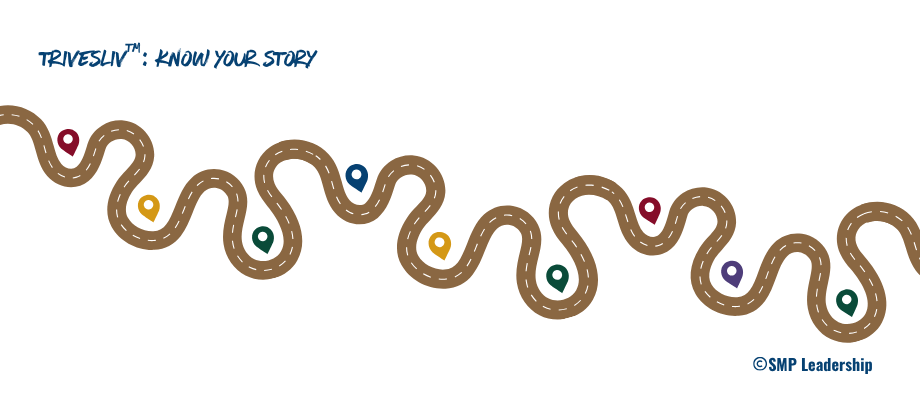
Draw a winding road on a sheet of paper. Mark it with small hashmarks for significant events, insights, or moments. Include the difficult and the energizing. Then look at what was happening within and between the marks: how your identity, skills, and growth were taking shape along the way.
Give it an unhurried hour. You don’t need to capture everything.
Then, at a second sitting, look at the road again. Who was beside you at each mark? List five people who shaped how you lead. For each one, ask: What did they teach me in words? What did they teach me without words? What do I want to keep?
Finally, ask yourself:
- What patterns, beliefs, or assumptions do I notice?
- What do I want to carry forward, reconsider, or do differently?
- What is one insight I will act on?
You’ll come back to this map again and again, adding to it each year just as a tree adds growth rings. Your story continues, and so does your understanding of it.
Fuel hope is next: the practice of cultivating a future worth moving toward. But a future will only be as honest as the story beneath it. Until then, draw the road and notice what’s there. Which moment have you been walking past? And who will you intentionally become?
*Contributors to the True North Fieldbook: Emerging Leaders Edition include Nick Craig, Scott Snook, Lauren Schwenk, and Josh Hall.

